
Verdict
The iPhone 18 Pro is a major camera-focused refinement: variable aperture and Pro controls finally give experienced shooters more direct creative control, while A20 Pro and the redesigned vapor chamber strengthen sustained performance.
The iPhone 18 Pro is not a redesign for the sake of looking new. Apple has concentrated its 2026 work on the parts that affect demanding users most: the camera, sustained performance, battery efficiency and software controls. The headline feature is the 48MP Fusion Main camera with a true variable aperture. Instead of a fixed opening, the camera can move through multiple aperture settings, giving the system more control over low-light exposure, depth of field and how much of a group scene stays in focus. That change, combined with new manual Pro controls, gives the “Pro” name more substance than a routine annual camera bump.
Design and display
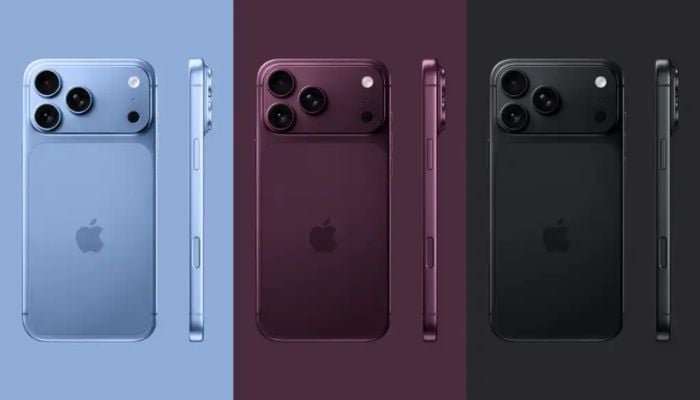
The 6.3-inch Super Retina XDR OLED keeps the compact-Pro idea alive. It is large enough for photo editing and media but significantly easier to handle than a 6.9-inch Pro Max. ProMotion runs up to 120Hz, Always-On display remains, outdoor brightness reaches up to 3,000 nits, and the smaller Dynamic Island can surface more simultaneous activity information. The aluminum unibody and Ceramic Shield 2 front and back are paired with IP68 resistance.
The trade-off is weight. At roughly 211g, the 18 Pro is not a light small phone. Buyers coming from the previous generation may notice that before they notice the visual changes. Still, the smaller chassis remains the main reason to choose this model over the Pro Max: you get the same core camera and processor without committing to the largest iPhone body.
A20 Pro performance and thermals
A20 Pro moves to a 2nm process and combines a six-core CPU, seven-core GPU and Dual 16-core Neural Engine. Apple also redesigned the thermal path with a larger next-generation vapor chamber. That matters more than a short benchmark burst because sustained gaming, video processing, AI workloads and camera recording can all expose thermal limits. Apple claims a large sustained-performance gain over the previous generation, and independent reviews from TechRadar and Tom’s Guide have reported notably strong performance and improved thermal behavior.
For normal use, the more important point is longevity. The phone has performance headroom far beyond messaging and browsing. Wi-Fi 7, Bluetooth 6 and the C2 modem update the connectivity platform as well. For buyers keeping an iPhone for four or five years, the combination is more valuable than chasing a single benchmark score.
Camera: variable aperture changes the conversation
The 48MP Fusion Main camera can operate at f/1.48, f/1.8, f/2.8 and f/4.0. A wider aperture can admit more light; a narrower setting can increase depth of field when you want more of a scene in focus. Apple also exposes aperture, shutter speed, white balance and histogram tools through the new Pro controls. That is the most important philosophical change: Apple is still automating the default camera experience, but it is giving experienced photographers more direct control when they want it.
The main camera is joined by a 48MP Fusion Ultra Wide and a 48MP Fusion Telephoto at 4x, with optical-quality options extending to 8x. Digital zoom reaches up to 40x. That does not guarantee that every long-range image will beat specialized Android camera flagships, but it gives the 18 Pro a broad native focal-length range in a relatively compact phone. Independent reviews have highlighted the variable aperture and broader creative control as the biggest camera improvement of this generation.
Video remains a major strength. The phone supports 4K Dolby Vision up to 120fps in supported modes, ProRes workflows, Apple Log and advanced audio tools. Apple Reference Image is also designed to preserve a signed reference of what the sensor captured, which could be useful for photographers and journalists concerned about image authenticity.
Battery and charging
Apple rates eSIM-only iPhone 18 Pro models for up to 36 hours of video playback. Wired charging can reach about 50% in around 15 minutes with a compatible 60W-capable AVS adapter, while MagSafe and Qi2 can charge up to 25W. Those numbers finally move charging convenience closer to what premium buyers expect, even if some Android rivals still offer dramatically higher peak wattage.
Independent reviews have been positive about battery endurance, but regional hardware matters: Apple notes that some eSIM-only versions use the physical-SIM space for a larger battery. That is exactly why PhonicSpecs keeps regional SIM and battery information separate instead of pretending every market has identical internals.
iOS 27, Siri AI and ownership
iOS 27 adds the next generation of Apple Intelligence and Siri AI, with personal context, onscreen awareness and camera-based assistance among the headline features. Some functions remain language- or region-dependent, so the software should be judged by what is actually available where you live rather than by launch-stage demos alone. The phone also benefits from the long iPhone software-support culture and Apple’s mature accessory and service ecosystem.
Who should buy it?
The 18 Pro is best for photographers, creators and power users who want Apple’s newest camera and silicon in a body smaller than the Pro Max. It is also a strong upgrade from significantly older Pro models. The case is weaker for a 17 Pro owner who does not care about variable aperture, charging or sustained performance; the overall experience remains recognizably iPhone rather than a completely new category.
Verdict
The iPhone 18 Pro earns its premium primarily through the camera and sustained-performance improvements. Variable aperture, real Pro controls, A20 Pro, stronger cooling and faster charging make the upgrades practical rather than decorative. The price is high and the phone has become heavier, but it is one of the most complete compact premium phones available. This PhonicSpecs review combines verified manufacturer specifications with published independent testing; it does not claim a PhonicSpecs hands-on laboratory test.
Pros & Cons
Pros
- Variable-aperture 48MP main camera
- 48MP ultrawide and telephoto system
- A20 Pro performance
- Improved vapor-chamber cooling
- 120Hz 6.3-inch OLED
- Faster wired and 25W wireless charging
- Long software life
Cons
- Very expensive
- Heavier than its predecessor
- Upgrade from 17 Pro is selective rather than transformational
- Some Siri AI features vary by language and region
Frequently Asked Questions
What is special about the iPhone 18 Pro camera?
Its 48MP Fusion Main camera uses variable aperture and Apple now provides Pro controls for aperture, shutter speed, white balance and histogram information.
How far can the iPhone 18 Pro zoom?
Apple lists optical-quality options reaching 8x, a 16x optical-quality zoom range including zoom out, and digital zoom up to 40x.
Should an iPhone 17 Pro owner upgrade?
Not automatically. The strongest reasons are the variable-aperture camera, new Pro controls, improved sustained performance, faster charging and battery improvements.