
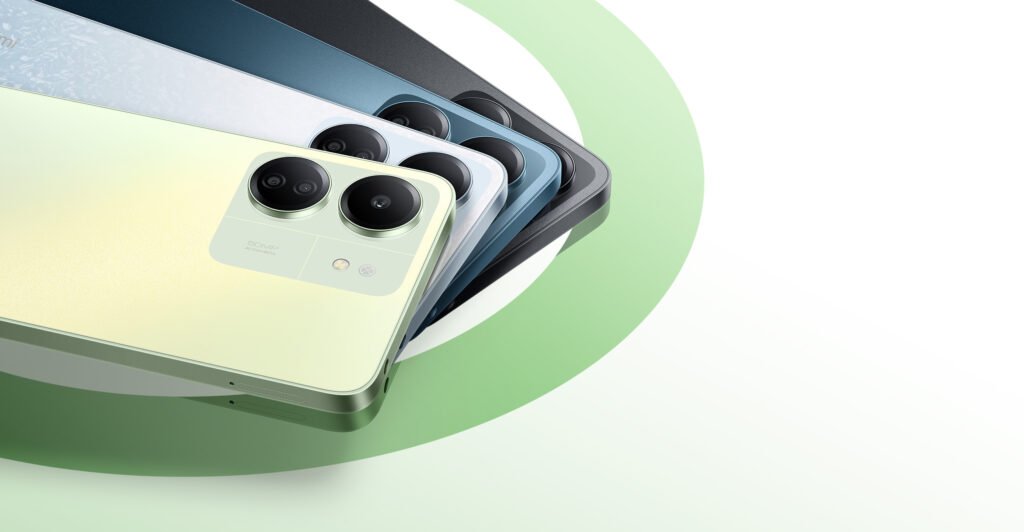
Verdict
A sensible low-cost used phone, not a strong new-phone buy in 2026. Battery life and storage flexibility still work in its favour; display sharpness, charging and ageing hardware work against it.
The Redmi 13C became popular by doing budget-phone basics well: a large 90Hz screen, Helio G85, 5000mAh battery, 50MP main camera, microSD expansion and a headphone jack at an accessible price. That formula explains why the model still attracts substantial Pakistan search demand. In 2026, however, it should be judged primarily as a used or leftover-stock phone, because newer entry-level devices have moved forward in display resolution, charging, software and connectivity.
Design and display: modern enough, but the resolution is the compromise
The 6.74-inch LCD runs at up to 90Hz, which makes basic scrolling smoother than a 60Hz budget display. The weakness is resolution: 1600 x 720 pixels on a screen this large produces much lower pixel density than Full HD+ alternatives.
Notebookcheck found the phone well built for the class and praised the modernised design, but also identified the low-resolution screen as one of the main compromises. For video and reading it is usable; buyers who care about crisp small text should compare Full HD+ options.
Performance and storage
MediaTek’s Helio G85 was already an established budget chipset when the Redmi 13C launched. Notebookcheck measured respectable performance for the price class, but this is still hardware intended for everyday tasks rather than demanding gaming.
The phone’s storage options were generous for its segment, and a dedicated microSD slot is genuinely useful. Some variants use relatively slow storage technology, so app installs and heavy file operations will not feel like a modern UFS-equipped mid-ranger.
Camera: adequate main camera, limited flexibility
The 50MP main camera is useful for ordinary daylight photos. The additional small sensors do not create the flexibility of a real ultrawide or telephoto camera, and the 8MP front camera is basic by current standards.
Notebookcheck’s testing described the cameras as usable for the class but not suited to demanding photography. That is the right expectation: the Redmi 13C is a documentation-and-social-photo phone, not a camera-first purchase.
Battery life and charging
The 5000mAh battery remains a strong everyday foundation. Notebookcheck recorded roughly 15 hours and 48 minutes in its Wi-Fi web-browsing test, showing that the phone can deliver good endurance under controlled conditions.
Charging is limited to 18W wired. That is slow next to many 2026 budget phones, and used-unit battery health can further change the experience. A prospective buyer should test both charging speed and overnight standby drain.
Software and long-term ownership
The Redmi 13C launched with Android 13 and MIUI 14. Xiaomi listed multi-year security support for the model, but by 2026 the phone is naturally much further through its support lifecycle than a current budget release.
The side fingerprint reader, headphone jack, FM radio and dedicated microSD slot remain practical. The phone lacks 5G, which is not fatal for a low-cost used purchase but should be reflected in the price.
Should you buy Redmi 13C in 2026?
Only if the price is genuinely low. The Redmi 13C is still a competent basic phone for calls, messaging, social media, video and light apps, and its battery and storage flexibility remain useful.
It becomes poor value when sellers ask close to the price of newer budget models with sharper displays, faster charging, longer update support or 5G. In other words, the Redmi 13C has not become a bad phone; it has simply moved into a different part of the market.
Review methodology
This PhonicSpecs review uses Xiaomi’s official specifications and independent Notebookcheck/GSMArena-family testing of the Redmi 13C/Poco C65 hardware platform. PhonicSpecs has not conducted its own battery, display or camera lab measurements. Because Pakistan retail now treats the model as discontinued, the review focuses on used/old-stock value rather than presenting a stale last-listed price as current.
Pros & Cons
Pros
- Good battery endurance
- 90Hz display
- 50MP main camera
- Dedicated microSD slot
- 3.5mm headphone jack
- Practical budget performance
Cons
- Low-resolution HD+ display
- 18W charging is slow
- No 5G
- Ageing Helio G85 chipset
- Basic secondary cameras
- Discontinued retail status
Frequently Asked Questions
Does Redmi 13C support 5G?
No. The Redmi 13C is a 4G/LTE phone powered by MediaTek Helio G85.
Is Redmi 13C still worth buying in 2026?
Only at a low used or old-stock price. Its battery and basic performance remain useful, but newer budget phones offer sharper displays, faster charging and longer support.
How good is Redmi 13C battery life?
Battery life is one of its better traits. Notebookcheck measured about 15 hours and 48 minutes of Wi-Fi web browsing under its controlled test conditions; actual use varies with brightness, signal and battery health.